
Soil health testing (CEMA 216)
NRCS can pay for a soil health test on your land. As CEMA 216 Qualified Individuals, we handle the sampling, the lab work and the report.
What CEMA 216 is
CEMA 216 is an NRCS Conservation Evaluation and Monitoring Activity for soil health testing on any land use, from cropland and pasture to rangeland, orchards and vineyards. It measures the biological, chemical and physical health of your soil and gives you a baseline to measure your management against.
In NRCS's Regenerative Pilot Program? Your contract requires a soil health test in at least the first and last years. We can do both, at the same locations, so the results compare.
What tests are included
Every CEMA 216 test includes the seven tests in the foundation panel. An optional advanced panel takes a closer look at soil biology. Click any test to see what it measures and why it matters.
We use CEMA 216 certified labs for all analyses.
Foundation panelRequired for every CEMA 216 test
Advanced panelOptional. Choose one: PLFA, or three soil enzymes
Foundation panel
Soil pH
- What it measures
- How acidic or alkaline the soil is, measured in a mix of soil and water or a weak salt solution.
- Why it matters
- pH controls how much of the soil's nutrients plants can actually use and how active soil microbes are. When it's off, you can pay for fertilizer the crop can't take up. It's also needed to read the other results, since respiration, enzyme activity and nutrient supply all shift with pH.
- What changes it
- Lime raises pH. Some nitrogen fertilizers and elemental sulfur lower it.
On your lab report: pH (1:1 water or CaCl₂)
Not sure whether the advanced panel fits your goals, or how it would be paid for? Ask us.
How it works
Apply with NRCS
Ask your local USDA Service Center about CEMA 216 and apply by your state's ranking dates.
Planning meeting
Once CEMA 216 is in your contract, we meet with you and your NRCS field office to agree on fields and a sampling plan.
Sampling and lab work
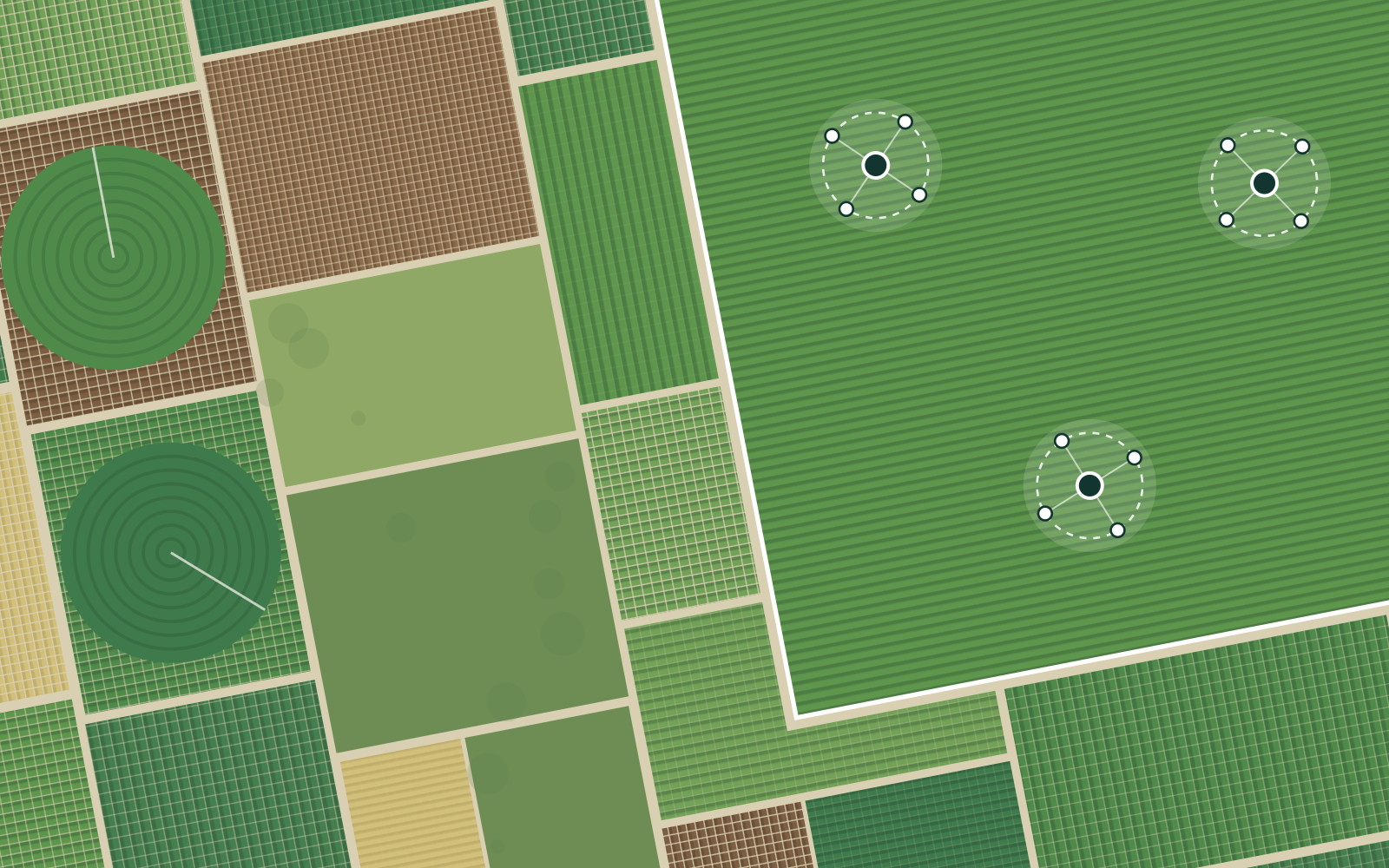
We sample at least three GPS-located sites per field and send the samples to a CEMA 216 certified lab.
Your report
Your results, a sampling map and what they mean for your land, with a copy for NRCS if you choose.
Common questions
Who pays for the test?
CEMA 216 is NRCS financial assistance that helps pay for hiring a Qualified Individual to complete the testing. Your local USDA Service Center can confirm what your contract covers.
How many samples do you take?
At least three sampling locations per field. Each location is a composite of five subsamples taken 6 to 8 inches deep, and every location is recorded with GPS.
Which labs run the tests?
Independent commercial labs that hold the certification CEMA 216 requires and run NRCS's standard methods. Retests go to the same lab with the same methods, so results compare year to year.
Can you retest the same spots later?
Yes. Follow-up tests use the same GPS locations, the same lab and the same methods, so the results can be compared year to year.
Who sees my results?
The full report goes to you. A copy goes to your local NRCS office only with your permission.
Reach out to learn more
Send us your details and what you're interested in. We'll get back to you to set up a free consultation.
- Intuitiveagriculture@gmail.comEmail us anytime
- (254) 598-8974Call or text
Related services
 Coming soon
NRCS conservation planning
Planning and application help for EQIP, CSP and other NRCS conservation programs.
See what's planned
Soil fertility & nutrient analysis
Grid soil sampling and fertilizer recommendations built from your own fields' data.
Learn more
Agrivoltaics & vineyard grazing
Partnering sheep ranchers with solar sites and vineyards, and writing the grazing plans.
Learn more